Modern enterprises generate data at an unprecedented scale, yet turning that data into timely, trusted business insights remains one of the biggest challenges facing organizations today. According to IDC, the global datasphere is expected to reach 181 zettabytes by 2025, while Gartner estimates that poor data quality costs organizations an average of $12.9 million annually. As businesses expand across digital channels, cloud platforms, and connected systems, the challenge is no longer collecting data; it’s transforming it into reliable intelligence that drives better business decisions.
Many organizations continue to struggle with fragmented reporting, inconsistent KPIs, duplicate datasets, and disconnected analytics platforms. As a result, business leaders often spend more time reconciling conflicting reports than acting on insights, delaying decisions that impact revenue, customer experience, operational efficiency, and long-term growth.
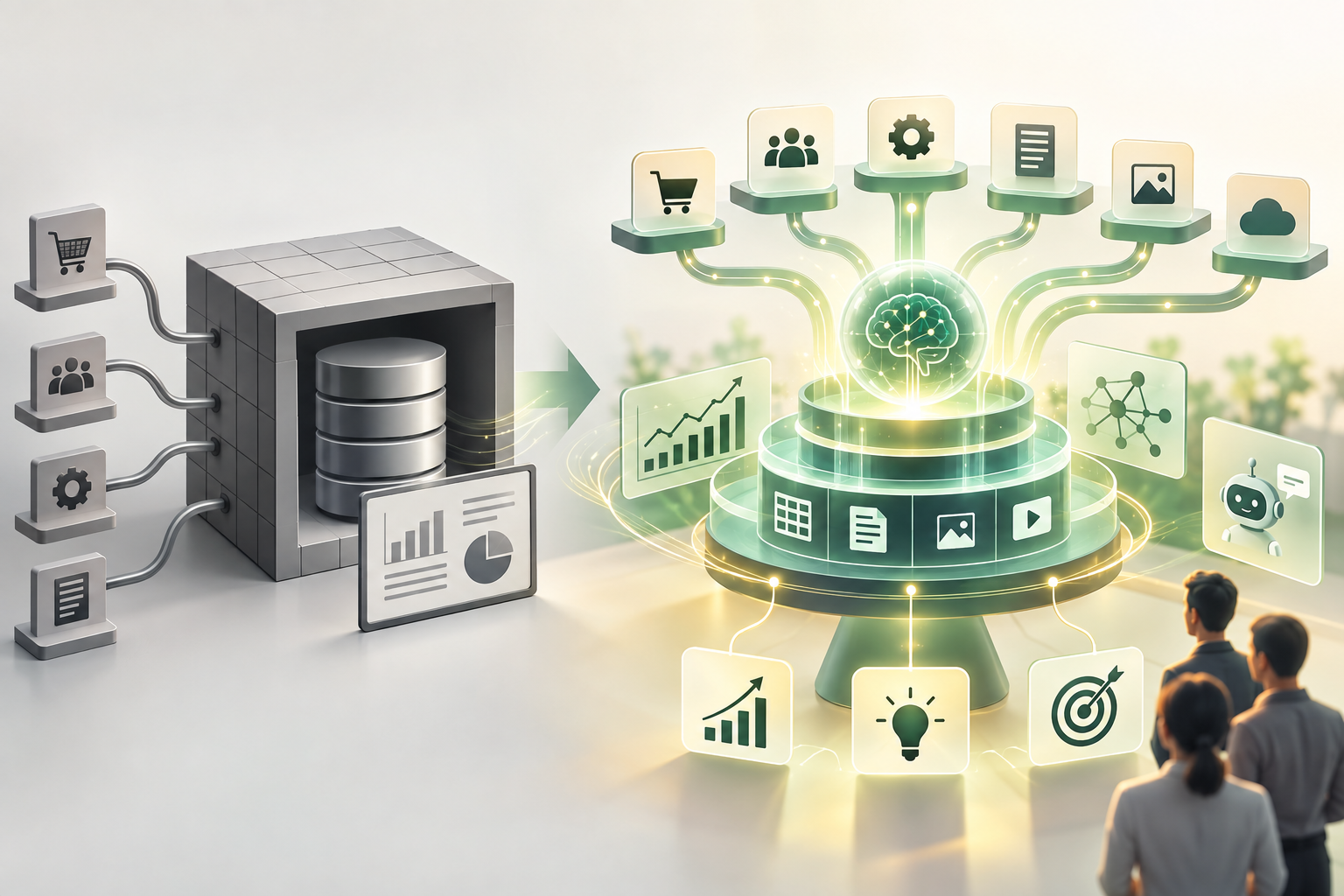
Building a modern data foundation has therefore become a strategic business priority. A modern data lakehouse addresses these challenges by unifying enterprise data into a single, governed platform that supports business intelligence, analytics, and AI. By bringing together data integration, governance, and scalable analytics, it enables organizations to deliver trusted insights faster, improve collaboration across business functions, and create a future-ready foundation for innovation and data-driven decision-making.
Why Enterprises Are Rethinking Their Data Strategy
The pace of business has changed dramatically. Executives are expected to respond quickly to market shifts, customer expectations, supply chain disruptions, and competitive pressures. Yet many organizations continue to rely on fragmented data ecosystems where every business function maintains its own reports and definitions of success.
Consider a retail enterprise preparing for a quarterly business review. Finance reports one revenue number, Sales presents another, while Operations attributes declining profitability to inventory inefficiencies. Each team has valid data, but from different sources, refreshed at different times, and calculated using different business rules. Instead of discussing growth opportunities, leadership spends valuable time reconciling reports.
This is why organizations are modernizing their data platforms not simply to manage larger volumes of data, but to establish a single source of truth that every business function can trust. The objective is to move from reporting on what happened to confidently deciding what should happen next.
Building a Business-Ready Data Foundation
A modern data lakehouse is more than a centralized data platform; it is the foundation for trusted business intelligence. By bringing together data from ERP systems, CRM platforms, finance, supply chain, customer applications, and digital channels, organizations create a unified view of the business instead of isolated departmental silos.
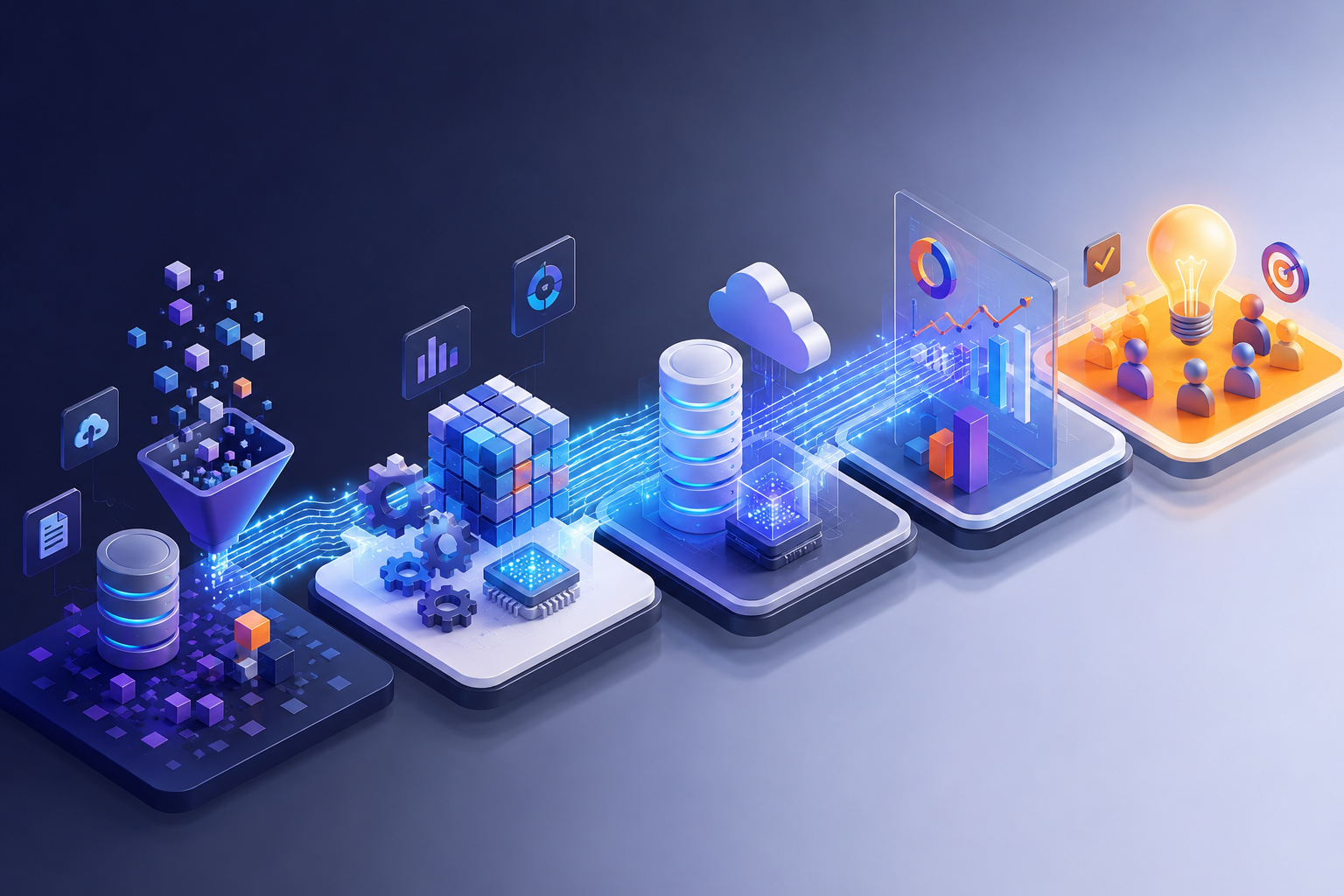
However, consolidating data alone is not enough. Operational data is often incomplete, inconsistent, or duplicated, making it unreliable for decision-making. To become business-ready, it must be continuously ingested, validated, standardized, enriched, and governed before it reaches business users.
Many organizations adopt the Medallion Architecture to support this journey. The bronze layer captures raw data as it arrives, preserving it for traceability and auditability. The silver layer cleanses, standardizes, and integrates data across systems, creating a consistent view of customers, products, and operations. Finally, the Gold layer delivers curated datasets and trusted KPIs that power executive dashboards, reports, and self-service analytics.
Technologies such as Apache Spark, Apache Iceberg, Apache Polaris, and Dagster enable this process by supporting large-scale processing, open data management, governance, and orchestration. But their real value lies in the business outcomes they deliver: a single source of truth, consistent business metrics, faster reporting, and greater confidence in decision-making. With a trusted data foundation in place, organizations can not only strengthen business intelligence but also accelerate advanced analytics, machine learning, and generative AI initiatives.
Business Intelligence Is Only as Strong as the Data Behind It
Many organizations invest heavily in dashboards and visualization tools, yet still struggle to trust the insights they produce. The issue often lies not with the reporting layer, but with the underlying data foundation.
Effective business intelligence depends on consistent data quality, governance, lineage, and standardized business definitions. When these capabilities are built into the platform from the beginning, organizations spend less time validating reports and more time acting on insights. The result is faster decision-making, improved operational efficiency, lower infrastructure complexity, and greater confidence across the enterprise.
Path to a modern data foundations
Building a modern data platform requires more than adopting new technologies—it requires aligning data architecture with business goals. By combining scalable data engineering, a modern lakehouse architecture, and strong governance, organizations can eliminate data silos, improve data quality, and deliver trusted insights that power both business intelligence and AI.
As AI adoption grows, a well-governed, scalable data foundation becomes essential for faster decision-making, operational efficiency, and long-term innovation.
Prescience Decision Solutions, a Movate company, helps enterprises build these modern data foundations through data platform modernization, governance, analytics, and AI enablement, turning fragmented data into trusted, business-ready intelligence.